Lot #3
Kateřina Vincourová
Truth 2
Estimate: 100,000 CZK – 150,000 CZK
90,000 CZK

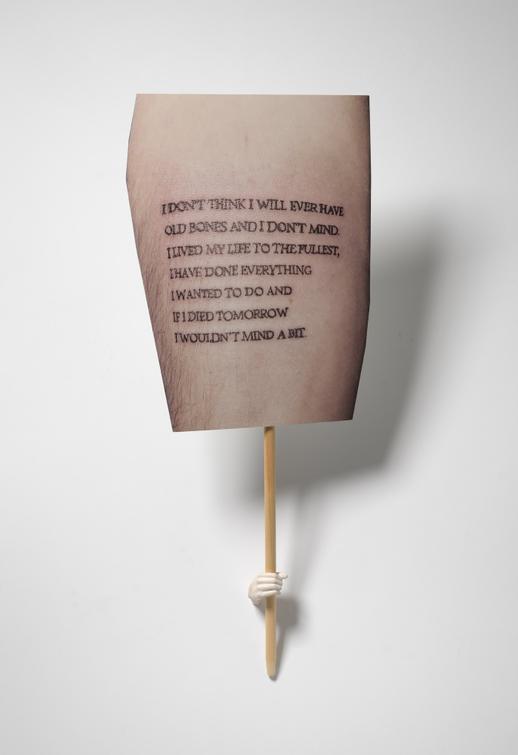
Kateřina Vincourová is one of the most prominent figures of the generation that shaped Czech art after the Velvet Revolution. In 1996 she became the first woman to win the Jindřich Chalupecký Award, and her enduring relevance on the art scene is further confirmed by the fact that nearly thirty years later she was the first female Czech artist to have her own solo exhibition at Galerie Rudolfinum. Vincourová’s work is primarily associated with object art and spatial installations. In the 1990s she began experimenting with previously overlooked materials such as rubber, polyethylene, polyester, and foam, which are characterized by their softness and fleeting nature. Her early works often featured inflatable objects based on symbols of consumerist culture such as cell phones, duffle bags, or purses. These works exhibit a pronounced critical attitude toward consumerism, which post-revolution Czech society quickly and often unthinkingly embraced. In later years Vincourová’s practice shifted to smaller, more intimate forms and spatial drawings made using everyday objects, textiles, and sewing supplies. It is precisely in this context that themes of memory, care, corporeality, and fragility come to the fore. Physicality and intimacy also feature prominently in her series Truth, which grew out of her systematic interest in photographs of tattoos that their owners voluntarily post on social media. She turns these photographs into placards mounted on wooden poles, which are exhibited as gallery objects. She takes the enlarged and cropped fragments of skin - with their digital imperfections left visible - and transforms them from an intimate statement into a public image, providing them with new semantic frameworks. The Truth series explores the boundaries between body, image, memory, ownership, and voluntarily shared intimacy.
70 % of the hammer rice is allocated to support the non-profit foundation Spolu s odvahou, a member of the Bátor Tábor family.
Other lots in the same auction:

 Cookies settings
We use cookies to improve your user experience and our services. You can give your consent by clicking on the button "Allow all".
More information about data protection and cookies.